I spent two weeks learning about Internet Governance. Yep, that’s a thing. And no, it’s not about turning off Wi-Fi when your little brother is annoying you.
It’s actually about how people, governments, companies, tech experts, and everyday folks like you and me make decisions about how the Internet works. I know, I know… sounds deep. But stay with me.
Week One: The Warm-Up
The first week was all about getting to know the basics. Beginning with where it all began
A Brief History of the Internet
The story of the Internet begins in the late 1960s, with a U.S. project known as ARPANET, developed by the Department of Defense’s Advanced Research Projects Agency (ARPA). It was designed to connect computers at research institutions and share information over long distances a revolutionary idea at the time.
Then in October 1969, something historic happened. A graduate student named Charley Kline at UCLA tried to send a message to a computer at Stanford Research Institute. The intended message was the word “login” The First Message Transmission.
But… the system crashed after just the first two letters were sent.
So the very first message ever transmitted over what would become the Internet was simply: “lo – as in Lo and behold!” A crash, yet the beginning of a digital revolution.
In the 1970s, Vint Cerf and Bob Kahn, the fathers of the Internet developed the TCP/IP protocol, which became the language of the Internet, enabling different networks to connect and communicate reliably.
Then in 1989, Sir Tim Berners-Lee gave us the World Wide Web, while working at CERN in Switzerland. He created a system of linked documents accessed through a browser which brought the Internet to life for everyday users.
Quick Clarification: Internet vs Web
- The Internet is the physical and protocol-based infrastructure — cables, satellites, routers, and the TCP/IP stack.
- The Web is the interface in which we access the internet, what you see and use on top of it websites, apps, online articles and this my blog post
Think of the Internet as the highway, and the Web as the vehicle you drive on it.
Watch this video to see and listen from Dr. Vint Cert and colleagues on how the Internet evolved. How the Internet Began (1969–1983) with Vint Cerf and Leonard Kleinrock.
What even is Internet Governance?
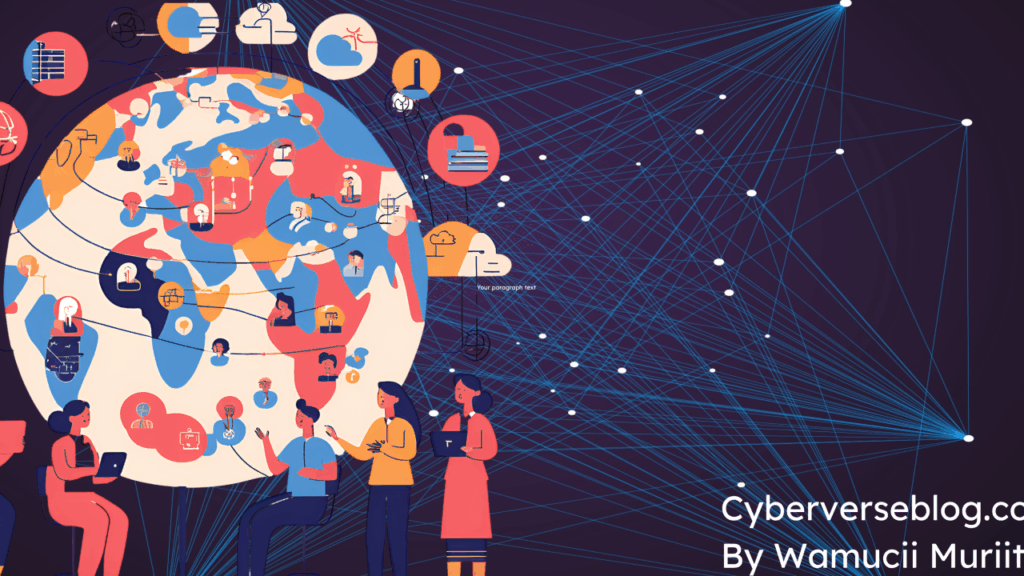
It’s how rules, norms, and decisions are made about how the Internet is used. And guess what? It’s not just done by one big boss. It’s a multistakeholder approach, which means different groups (called stakeholders) come together to make decisions about how the Internet should work. These groups include:
- Private sector (tech companies and businesses like ISPs),
- Civil society (you, me, NGOS, activists) – These are people or groups that represent the interests of regular users.
- The technical community – Engineers and experts who build and maintain the Internet.
- Academia – brings knowledge, research, and fresh ideas to the Internet Governance table, helping shape smarter, future-ready policies
- Governments (the policy people)
And what’s the importance of this approach, I will use an example for better understanding:
Imagine deciding how to keep a park clean. It’s not just the government who decides, but also the people who use the park, local businesses, and even the people who maintain the park. If everyone has a say, the decision is likely to be better and more fair. That’s the idea behind the multistakeholder approach to governing the Internet. You gerrit? I really hope you do.
Internet Design Principles
Three design principles shape how the Internet works and how it continues to grow:
- Openness: Anyone can create, share, and innovate without needing permission.
- End-to-End Communication: The network itself doesn’t meddle with what you send it just gets your data from point A to B. The power lies at the end – with users.
- Access: The dream is for everyone, everywhere, to connect. While we’re not fully there yet, the principle drives global efforts toward universal connectivity.
Data Privacy: Who’s Watching the Watchers?
In a world where “free” platforms and products profit off personal data, privacy becomes both a right and a battlefield. Like the saying goes, “If you’re not paying for the product, you are the product.” Different regions have responded differently with the EU’s GDPR standing as a strong example of privacy-first regulation. But in many parts of the world, people still scroll unaware of just how much of themselves they’re giving away. This is why Internet governance is also about ethics, equity, and empowerment.
Then we talked about key Internet Governance issues
- Cybercrime from phishing scams to ransomware attacks. Tackling it requires international cooperation and common laws.
- Network Neutrality ensures that Internet service providers treat all data equally. No fast lanes for rich companies, no slow lanes for the rest of us.
- Accessibility reminds us that if the Internet isn’t for everyone, including people with disabilities then it fails its purpose.
And Then Came AI…
Artificial Intelligence isn’t just a buzzword. It’s transforming how we search, shop, create, and even govern. But it also brings big questions: Who trains AI? Whose values does it reflect? And how do we prevent it from deepening digital divides? As AI continues to integrate with our digital lives, governance becomes not just necessary, but urgent.
Week Two: Thought leaders sessions
Now this is where it got even better.
We got to hear from people who’ve walked this path, KESIG alumni. These are folks from all kinds of fields—law (especially law, actually most of the cohortees are lawyers and advocates), IT like myself, engineering, and more, talking about real-world Internet issues. It wasn’t all serious; there were jokes, laughs, even a bit of “I-wish-I-knew-this-earlier” moments.
They talked about ICANN (which helps organise the internet’s phone book), the role of governments, the power of civil society, and how the technical community silently holds everything together.
And it hit me: Internet Governance isn’t some far-away thing. It’s right here, touching every part of our lives, how we communicate, work, learn, and even rest. The internet is more like our lifeline. Think about it.
What I Took Home
The Internet isn’t floating out there like magic. It’s made, managed, and maintained by people who care. And those people should include us. If we don’t show up, someone else makes the rules for us.
This course didn’t just teach me stuff, it woke me up. Now I want to get involved, raise awareness, and even help shape the future of the Internet in a way that works for everyone.
But the real magic? The people. Thought leaders from law, tech, civil society, and more came together to explore how we, as diverse voices, can shape the Internet we all use.
💙 A huge thank you to the amazing KESIG team and KICTANet for making this happen. Your efforts created not just a training, but a space for growth, dialogue, and connection. I feel inspired, challenged, and ready to keep the conversation going
And if you’re reading this, you’re already part of the conversation. So, thank you.
Oh, and I took a certificate of completion home after passing my final assessment, of course.